A strong start: STAR Online for vocational education
Many healthcare and social care students come into contact with people with dementia during their work placements or in their jobs. They deserve to be well prepared, and people with dementia deserve good care. To ensure that more up-to-date knowledge on dealing with dementia is incorporated into vocational education programmes, an existing online learning programme, STAR Online, was further developed for vocational education. This proved to be less straightforward than anticipated. But we succeeded.
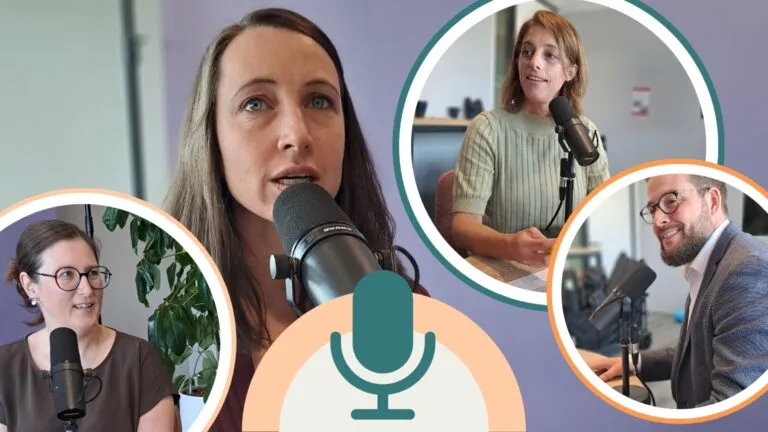
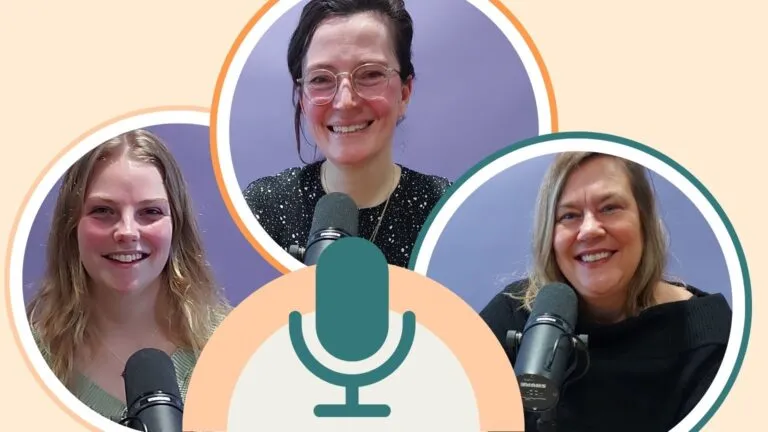
In this podcast, those involved – Associate Professor Dr Sietske Sikkes (Vrije Universiteit Amsterdam/Alzheimercentrum Amsterdam, SPREAD+), researcher Channah Osinga (Vrije Universiteit Amsterdam, SPREAD+) and practical trainer Natascha Aben (Novacollege), explain how they achieved this. And why it is hugely important that up-to-date knowledge about dementia is incorporated into vocational education programmes.
The discussion was led by the hosting duo Jeroen Vlug (researcher and project leader at DEMPACT partner Movisie) and Carlijn Lensink (former DEMPACT Impactmanager Education).
Listen here via Springcast, Spotify or YouTube.
Podcast | In a nutshell
Dementia is currently only covered to a limited extent in vocational training programmes for care and welfare. Yet there is a pressing need for this. Many students come into contact with people with dementia during their work placements and in their jobs. And the number of older people is increasing.
Up-to-date training on dementia gives future care professionals the preparation they need and improves the care provided to people with dementia. It also reduces the risk that vocational students, due to unpleasant experiences caused by inadequate preparation, might decide to work outside the field of elderly care – or drop out altogether.
STAR: greater empathy and more person-centred care
The digital teaching programme STAR Online can change that. This programme has long been available to informal carers and volunteers, and has been shown to be effective (according to international evaluations): participants developed greater empathy, a more positive attitude and were better able to provide person-centred care. STAR Online has recently been updated and adapted for vocational care and welfare courses.
In this podcast, University Senior Lecturer Sietske Sikkes (Vrije Universiteit Amsterdam/Alzheimercentrum Amsterdam), researcher Channah Osinga (Vrije Universiteit Amsterdam) and vocational college lecturer Natascha Aben (Novacollege) explain how they achieved this. They also answer the questions: how do you make scientific insights accessible, and how do you align an existing curriculum with the knowledge and needs of vocational teachers and students?
"We had hoped that 20 students would take part in the pilot. In the end, there were 50."
Minor adjustments… or perhaps not
Initially, Sikkes, Osinga and Aben thought that minor adjustments would suffice. That turned out not to be the case. STAR Online had to be significantly revised: the module was shortened (from around 130 to approximately 20 pages), made more practical and adapted to the learning style of vocational students. This required intensive collaboration, co-creation and a strong focus on practical and accessible learning. But it proved a success: it resulted in more practical teaching materials.
An initial pilot involving 50 students also yielded many positive responses and useful feedback. Further evaluation (including an assessment of the training’s impact on the vocational students’ knowledge and empathy) and implementation are still to come. Aben: “We had hoped that 20 students would take part in the pilot. It turned out to be 50. They were very enthusiastic.”
The ongoing development of STAR Online will also yield practical tips for you.
Tips for developing vocational education on dementia
Work in collaboration with vocational education students and teachers
From the outset, Sikkes, Aben and Osinga collaborated with vocational education institutions Inholland, ROC Amsterdam and ROC Nova College Hoofddorp. Students and teachers contributed ideas on the content, structure and assessment questions for STAR Online, and students even provided their own case studies. This co-creation ensured that the module was better aligned with the needs of the target group, making it both more relevant and more useful.
Let go of preconceived products
Sikkes: “It did mean, however, that we had to let go of the end product we’d envisaged beforehand. We found that difficult: a lot of thought had already gone into it. But we did it, because ultimately it’s more important that the course meets the needs of the users. In the end, the result was all the better for it.”
"Students found the information about the brain less useful. (...) So that has been cut down."
Need: practical applicability
The vocational students were particularly in need of concrete guidance, such as learning how to deal with behaviour they did not understand or with aggressive behaviour. For this reason, the theoretical content was reduced, and the emphasis shifted to practical situations and practical approaches. This makes the content directly applicable during work placements and in the workplace. Students thus find the module more useful and are quicker to put the knowledge into practice.
Osinga: “We actually had quite a lot of information about what happens in the brain. But students who had tested the vocational education version of the STAR Online e-learning course found this information less useful. They don’t encounter it in their day-to-day practice either. So that has been cut down.”
"By combining online and face-to-face teaching, you can provide a deeper understanding."
Aligned with the MBO learning style: concise, visual and interactive
STAR Online originally contained around 130 pages of text. This has been significantly reduced to around 20 pages. It has also been made more visual. Instead of long blocks of text, illustrations, videos and click-through options have been added. This change makes the material less overwhelming, which in turn improves retention.
Ensure blended learning: online and in the classroom
Although STAR Online is essentially an online course, it was always combined with classroom-based lessons. Tutors introduced the theory and discussed practical examples. Students then worked through the modules independently. Sikkes: “This is a good example of ‘blended learning’. It’s precisely about the interaction between face-to-face and online learning. That’s how you can create greater depth.”
Make your design flexible
To offer in-depth content alongside the basics, interactive elements were devised: students could access additional information themselves. This keeps the core content concise, whilst allowing interested students to explore the subject in greater depth. This helps to keep the module accessible to students of different levels and interests.
Wide-ranging collaboration and support
The further development of STAR Online took place through the Academic Workshop on Support for Dementia following Diagnosis (see vumc.nl), in collaboration with vocational colleges and other educational institutions. This broad collaboration helped to resolve practical issues, such as the implementation of STAR Online across different educational systems. Thanks to the broad support, we were also able to disseminate and apply knowledge more quickly. Aben: “We had a very good collaboration, with short lines of communication. Research like this does take a long time. As a practitioner, I did find that a bit of a challenge myself.”
"I would welcome it if funders explicitly made room for implementation processes."
Implementation: set aside more time and money
STAR Online has not yet been implemented. Research into its effectiveness is still ongoing. The road to implementation is long and labour-intensive, as the account by Osinga, Aben and Sikkes shows – even in the case of a proven intervention such as STAR Online. The material must not only be adapted for vocational education, but also tested, then embedded in curricula and made technically suitable for different education systems. These are numerous and time-consuming steps. They all cost money, too, whilst funding for implementation is often scarcer than for new research. Sikkes: “I would welcome it if funders explicitly set aside resources for implementation processes.”
Want to find out more?
About the speakers
About STAR Online
- Vumc.nl/…/star-online-voor-verschillende-doelgroepen-ontwikkeling-en-evaluatie.htm
- Introductory video: Youtube.com/
About the organisations
More inspiration