“The opportunities involved in implementation are now much more tangible”
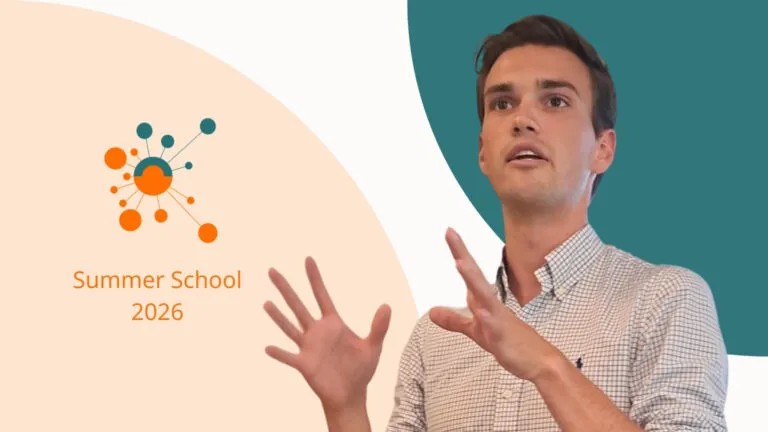
“As PhD students, we learn how to design research, collect data and publish our findings. But we learn far less about what happens afterwards,” says Teis Arets on quolead.nl. Arets is investigating how generative artificial intelligence and technology can contribute to the (social) lives and social connections of people with dementia. “But how do you build on your research once the project funding runs out? What funding schemes are available? And how do you translate scientific knowledge into practical applications?”
Arets and the other participants in the DEMPACT Summer School received ample answers to these and other questions during a five-day stay in Driebergen at the end of August 2026.
Implementation plan
Over the course of a week, Arets and the other participants worked on an implementation plan for their own project. This took place through workshops, lectures and personal accounts of implementation experiences. On the final day, participants presented their plans to a panel of experts.
A small selection of the activities: Health Holland held a workshop on public-private partnerships. Vilans worked with participants on translating results into language and formats suitable for different target groups. Pharos spoke about the importance of target group participation, diversity and cultural sensitivity. Developers from CRDL and CUE2WALK shared their experiences of implementation. And ZonMw discussed funding opportunities and support for the further development and implementation of your results.
"Implementation isn't something that comes after your research. You need to think about it whilst you're still carrying it out."
Arets was inspired, amongst other things, by the exchange of experiences. “Projects such as CRDL and Cue2Walk show that implementation is rarely straightforward, but that research can indeed find its way into practice. Their stories made the challenges and opportunities of implementation much more tangible and offered valuable lessons.”
Maximising impact
Arets also found the other participants – a diverse group with very different experiences in dementia research – to be a source of inspiration and new perspectives. “The discussions challenged me to think about concrete next steps in my research, and how I can maximise its impact beyond the academic world.”
Arets returned home with “a head full of ideas”, new contacts and a clearer picture of how implementation can become an integral part of the research process itself. “Implementation isn’t something that comes after your research. You need to think about it whilst you’re still conducting your research.”
DEMPACT Summer School: stay informed!
Would you also like to learn specifically how to put your research findings into practice? Send an email to Carmen Ensink: DEMPACT will then keep you informed about new Summer Schools.
More inspiration