Three myths about communication
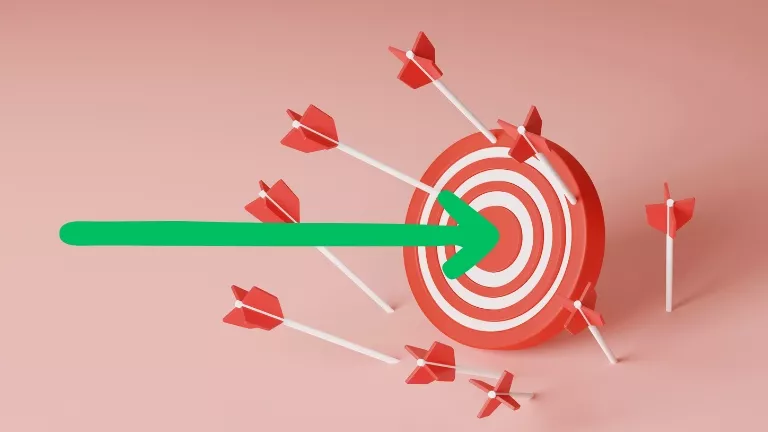
Sharp one-liners go down well in the media: they really stick in the public’s mind. As a result, public communication seems like a clever way to disseminate your research findings. This is a misconception. Take a look at three persistent myths about communication – and some tips on how to get your message across effectively.
You’ve got some great research findings: new insights, an intervention or a tool. You want to share them with everyone. That’s understandable. Just don’t forget to reach out (as well) to the people for whom you’re conducting the research. Public communication usually fails to do just that.
Myth 1: The larger the target audience, the greater the impact
You can reach the general public effectively with one-liners, especially if they’re funny, crude or witty. Communication about research findings is almost always longer or more nuanced. And it doesn’t stick as well with the general public. Yet it’s popular to disseminate it widely.
But the effectiveness of communication is often inversely proportional to the scale on which it is deployed. This is a principle from the Theory of Change, a scientifically underpinned model that helps to bring about and measure change.
This is hardly surprising. To draw a comparison: if you want to dispense a medicine to treat a specific symptom, you seek out people with that specific symptom. You do not hand out the medicine at random in a busy high street. Otherwise, you reach a lot of people but with little effect. The same applies to public communication.
Tip – how to find out where your target audience is
Just as you distribute medicines where patients with a specific condition are, you want to distribute your communication in the places where your target audience is. To do this, find out where your target audience gets its information from. Are there organisations, companies or associations specifically for your target audience? Or perhaps Facebook groups, magazines, meetings or knowledge cafés where your target audience looks for information? If so, see if you can share your findings there. DEMPACT is happy to help you identify suitable venues.
Myth 2: You already know who your target audience is
There’s a good chance you’ll identify people with dementia and their carers as your target audience. That makes sense: you’re conducting research for them. Yet in many cases, they aren’t the target audience. Who will be putting your findings into practice? Nurses, case managers, GPs or other professionals? They are, then, your target audience. It is through them that you will ultimately make a difference for people with dementia and their loved ones.
Identifying your target audience is actually quite tricky. For example, ‘healthcare professional’ seems clear, but this is a very broad target audience. In Dutch elderly care, there are more than thirty different roles, and you probably don’t need to reach all of them.
Tip – Take a close look: who is your target audience and what do they want to know?
Ask yourself the following questions:
- Who needs to put my findings, tool, intervention or other concrete outcome into practice?
- What do they need to know, do differently or learn?
Chances are you don’t know the specific answers. That’s not surprising. You’d need specialist knowledge, for example, about who in a care organisation is responsible for changes to care processes. DEMPACT knows this or can help you find out. Feel free to get in touch.
Myth 3: Public communication is always pointless
Whilst public communication may be less suitable for reaching your specific target group with a specific message, broad communication does fulfil another important function. It can contribute to general awareness, recognition and understanding of dementia. It is extremely valuable to contribute to this. Most funding bodies also encourage you to engage in public communication. Furthermore, public communication can raise your own profile and thus help with future collaborations and grant applications.
Tip: Define the aim of your communication
What do you want to achieve with your communication? By clearly defining your objective, you can better determine which target audience, which form of communication and which channel will be most effective. If you’re aiming to raise awareness amongst everyone aged 50 and over in the Netherlands, public communication is an option. Do you want nurses at memory clinics to start using your conversation tool? Then opt for more targeted communication via channels that already reach them. Do you want to convince people or engage them in your research during a presentation? Then practise ‘Pitching for Impact’.
Want to read more?
- Check out common mistakes in public information campaigns (and tips for clear communication) at Pharos.nl.
- Vilans and ZonMw have compiled practical tips on how to share your research findings effectively, using appropriate formats and channels: vilans.nl.
- Movisie offers tips on inclusive communication: movisie.nl.
- Also read the communication tips at zonmw.nl.
- Are you sharing your knowledge with the general public? If so, use language level B1. Terms such as ‘participation’, ‘prevention’ and ‘hereditary’ fall outside this scope. Check your terms at ishetB1.nl.
More inspiration