Issues surrounding GP data: expert session offers help
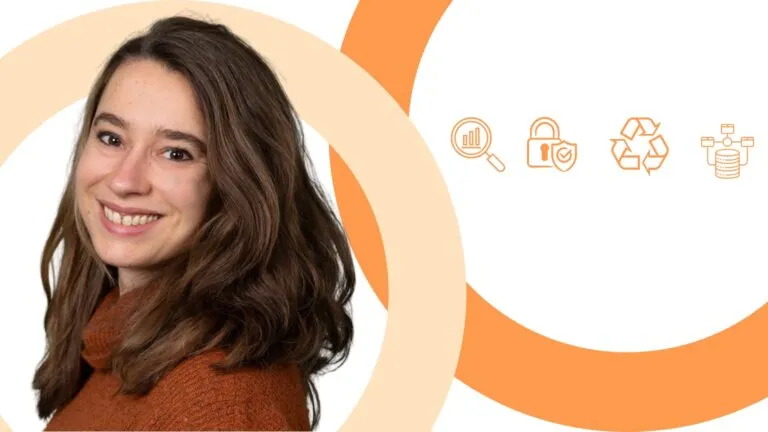
Dr Didi Lamers of DEMPACT recently organised the first online expert session on data management in dementia research. The theme of this kick-off session was working with GP data.
Lamers, Data Management Co-ordinator, brought together dementia researchers and experts to exchange experiences, including representatives from the Nivel research institute and the PHARMO Institute (a company that links anonymised healthcare data from GPs, pharmacies and hospitals). Lamers: “We discussed bottlenecks and explored how researchers can collaborate more effectively on GP data.”
Expert session: sorely needed
This turned out to be sorely needed. Lamers spoke with various dementia consortia that use GP data and found that they often encountered the same problems. “Individually, researchers invest a great deal of time in developing solutions to these kinds of issues. If we exchange knowledge systematically, we won’t all have to reinvent the wheel. Through DEMPACT’s expert sessions, we’re finding out how best to do this. In this way, we’re accelerating dementia research together.”
A rich source of knowledge
This is well worth the effort, as GP data are a rich source of knowledge. They provide insight into the course of the disease prior to a dementia diagnosis. And they contain information on symptoms, referrals and medication use amongst a representative group of people. Lamers: “In the Netherlands, there is no single central source of GP data. Data is collected by several organisations.” Such as Nivel, the knowledge institute that conducts research into primary and secondary care. The company PHARMO Institute. And various academic hospitals, also known as the ‘academic GP databases’. (See below for sources.)
Lack of consistency
A prerequisite for tapping into this source of knowledge is that researchers overcome the obstacles surrounding GP data. One of these is that researchers struggle with the (lack of) valid records of dementia diagnoses. Lamers: “There is a code for recording a dementia diagnosis, but it is not used consistently. So, the absence of a code does not necessarily mean there is no diagnosis. Conversely, when ‘dementia’ is mentioned, you do not know on what basis the diagnosis was made.”
Free-text fields: inaccessible
Another issue: how do you extract relevant information from free-text fields? Free-text fields are generally not accessible, as they may contain sensitive information. “Often, you’re only allowed to see the title,” explains Lamers. And it’s difficult to gather information from that: no standards have been agreed upon for documentation, so GPs handle it differently.
Different record-keeping systems
The fact that there are different record-keeping systems is, in itself, also problematic. It means you can miss out on information. The score for the widely used cognitive test MMSE (Mini-Mental State Examination), for example, may be stored in different places within a system. It might even be in a free-text field that you’re not authorised to view, making it appear as though the test wasn’t carried out. Lamers: “When you compare data from large groups of people across different GP practices, differences may emerge that are caused by different systems or because a particular GP documents things differently.”
Solutions and practical tips
These and other obstacles were discussed at length during the expert session on dementia research using GP data. Steps were also taken towards practical solutions. For example, participants exchanged tips on how to take into account significant differences between record-keeping systems and practices when conducting analyses.
Reaching out to one another
A less practical but important realisation also emerged: you don’t have to do it alone. “It’s good to know who else is dealing with similar problems,” confirms Lamers. “That way, you can reach out to one another and bounce ideas off each other if you run into any difficulties. If necessary, DEMPACT can help with that.”
Collaborating with GPs
Several participants also emphasised the importance of collaborating with GPs and GP researchers. Lamers: “To interpret data, you really need an understanding of GPs’ day-to-day practice and recording methods.” (See also End users will surprise you.)
Programming code shared
And a PhD student shared examples of her programming code, which she uses to extract information from free-text fields, such as MMSE scores and possible dementia diagnoses.
Next steps
Lamers was pleased with all the input and sees opportunities for further development. “We are now exploring how we can further shape this expert group. We are doing this in collaboration with Nivel and PHARMO, as they have the relevant subject-matter expertise.”
Sources of GP data
GP registrations from the academic centres:
- RNFM Maastricht: huisartsgeneeskundemaastricht.nl
- Erasmus MC: Ipci.nl
- UMC Groningen AHON database: umcg.nl
- FamilyMedicine network: famenet.nl
- VUmc ANHA: vumc.nl
- Julius General Practitioners’ Network.nl
- ELAN LUMC: lumc.nl
- PHARMO Institute: lumanity.com
- Nivel.nl
Need another expert session? Let us know!
Do you also work with GP data in dementia research and face similar challenges? Or would you like to exchange knowledge on another data-related topic in dementia research (such as working with existing data, data linkage, data harmonisation, or publishing data)? Please contact Didi Lamers.
More inspiration