“Public-private partnerships (PPPs) must be an integral part of innovation policy.”
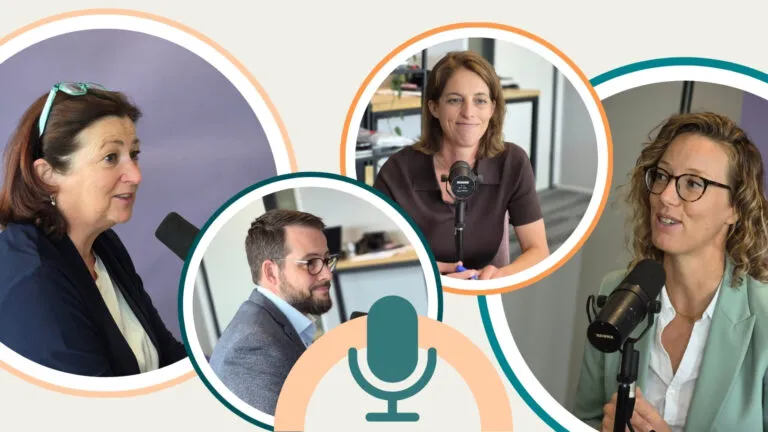
The Dutch government encourages collaboration between research institutions and businesses. And not just because this is good for the economy: public-private partnerships (PPPs) also ensure that academic findings have a greater impact on society. But what does that impact look like? How do PPPs actually work? And what support is available for dementia researchers? That is what this podcast is about.
Our guests are Conny Helder, a former minister and director in the healthcare sector (Chair of the Board at Health Holland), and Jolande Zijlstra, a PPP expert in life sciences and health (Operational Manager at Health Holland). They’ll tell you about PPP policy in the Netherlands, where the opportunities and risks lie – and offer advice on what you, as a researcher, can do.
This podcast is hosted by the duo Dr Jeroen Vlug (senior researcher at Movisie) and Dr Saartje Burgmans (Impactmanager Business-development at DEMPACT).
Listen to the podcast now (in Dutch).
Podcast | Summary
Conny Helder and Jolande Zijlstra of Health Holland describe public-private partnerships (PPPs) as essential for translating scientific knowledge about dementia more quickly into applications that contribute to the quality of life of people with dementia and their carers. The Netherlands conducts high-quality research into dementia. However, according to Helder, the link between science, the business sector, the care sector and the government could be much stronger. “You should not view PPPs as something supplementary, but as a natural part of innovation policy.”
What is Health Holland’s role?
In the Netherlands, Health Holland brings together researchers, businesses, healthcare organisations and public authorities. The organisation also supports and funds public-private research projects, with grants from the Ministry of Economic Affairs and Climate Policy.
Zijlstra: “Within what is known as mission-driven innovation policy, there is a specific mission for dementia. The aim is to ensure that good ideas do not gather dust on a shelf, but develop into innovations for patients, the healthcare sector and the economy.”
Helder: “It’s all about having a clear vision of the impact you want to achieve, and then breaking that down into very concrete projects and research consortia.”
Health Holland therefore creates the framework for collaboration, development, evaluation and implementation. Zijlstra: “So that the best ideas can emerge, be tested and ultimately find their way into practice. That is how we make a difference: as an ecosystem facilitator and impactpartner.”
PPS Initiatives in Dementia Research
Conny Helder explains that there are various initiatives to promote public-private partnerships (PPS) in the field of dementia. The National Dementia Strategy is an action plan drawn up by the Ministry of Health, Welfare and Sport to tackle the impact of dementia in the Netherlands through research, improvements in society, care and support.
Alzheimer’s Coalition
In addition, the Alzheimer Coalition was recently established by Wiesje van der Flier (director of Alzheimer Nederland). Helder refers to this as ‘the coalition of the doing’, bringing together Alzheimer Nederland, Alzheimer Centres, the Ministry of Health, Welfare and Sport (VWS), the Dutch Healthcare Institute and Health Holland to ensure greater coherence in their activities. “The aim is to prevent duplication of effort,” says Helder. “To identify gaps and achieve more than individual initiatives can.”
ABOARD and DemTech
One example of a major public-private partnership (PPP) programme in dementia research is ABOARD. In this initiative, thirty organisations are working together on earlier detection and, ultimately, the prevention of Alzheimer’s (see also this podcast). A second example is DemTech, which focuses on technology enabling people with dementia to live independently at home for longer; this project has developed a compass that guides people with dementia back home if they get lost.
What does PPP offer dementia researchers?
According to Helder and Zijlstra, PPPs also benefit researchers. Namely, they provide access to the knowledge and expertise needed to commercialise, develop and scale up scientific insights. Zijlstra: “For example, companies have knowledge of product development, the market and what is needed to ensure a solution is actually purchased and implemented.” Helder: “And that can ultimately lead to better diagnostics, therapies and technology that enables people to live independently at home for longer.”
Helder and Zijlstra believe it would be helpful if dementia researchers were exposed to public-private partnerships (PPPs) early on in their careers. For example, because it is a condition for receiving funding, or through meetings with companies.
Industrial PhD call
Health Holland has also launched an industrial PhD call. Under this scheme, PhD students are partly employed by the company and partly by the research institution, with workspaces at both locations. Zijlstra: “In this way, we ensure that they learn to understand the different interests from the perspectives of both academia and industry. And we gain more researchers who are better equipped to collaborate in public-private partnerships.”
What can researchers do themselves?
Zijlstra: “I would advise being open to public-private partnerships (PPPs). And to actively seek out contacts, for example at events where companies are also present. PPPs often start with an informal conversation. Or give Saartje at DEMPACT a call.” Taking part in the BioBusiness Summer School or Venture Challenge can also help. “And get in touch with your institution’s Technology/Knowledge Transfer Offices for support.”
Avoidable risks
When talking about the risks of PPPs, the usual suspects quickly come to mind. Think of loss of independence and issues surrounding intellectual property. Helder: “Intellectual property – whose idea is this, who is allowed to profit from it? – is a regular feature on the list of hiccups surrounding PPPs. But not if you sort it out properly in advance; then it’s not a problem.” This is also evident from the podcast on PPPs between ABOARD and Fujirebio Europe.
Zijlstra believes it’s a risk if a PPP becomes little more than an exercise on paper. “If parties continue to pursue their own agendas, you miss out on the power of working together. An equal partnership is therefore crucial, and Health Holland is happy to contribute its ideas on this.”
Fancy getting started with a PPS?
Please feel free to contact Saartje Burgmans, Impactmanager Business-development. She’d be happy to discuss this with you and, if necessary, introduce you to Health Holland.
Want to find out more?
- Hyphen projects: hyphenprojects.nl
- Venture Challenge: nwo.nl
- About Conny Helder: linkedin.com
- About Jolande Zijlstra: linkedin.com
- Health Holland.com
More inspiration