Young vocational student lacks (your?) knowledge of dementia

How do vocational college teachers and healthcare students (such as Kenny) learn about dementia? Two ROC teachers and a UKON network coordinator provide some insight. And DEMPACT adds to this with an educational needs assessment.
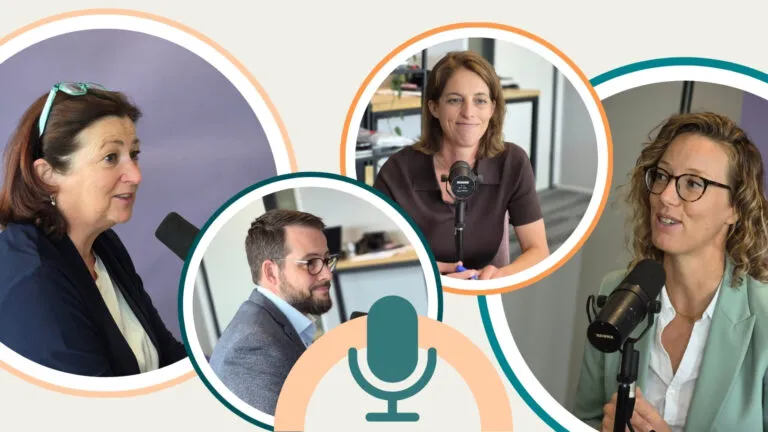
QoLEAD put ‘sharing knowledge with vocational healthcare education’ on the agenda for a consortium day. The consortium asked DEMPACT to contribute ideas and utilise its network. With great enthusiasm, ROC Mondriaan from The Hague, ROC Nijmegen and the Nijmegen University Knowledge Network for Elderly Care (UKON) gave guest presentations, as did DEMPACT itself. You can read the summary here.
Did you know? – Vocational education (MBO) is the largest group
In the Netherlands, there are around 60 care and welfare courses at secondary vocational education (MBO), higher professional education (HBO) and university (WO) levels. DEMPACT primarily facilitates the application of knowledge in secondary vocational education. And there’s a good reason for that.
The vast majority of professionals working in elderly care are MBO-qualified. If we apply knowledge from dementia research to this group, the impact on dementia care and wellbeing is enormous.
A great need for knowledge and skills relating to dementia
And there is another reason for our focus on vocational education. Early on in their training and careers, almost all vocational students frequently encounter people with dementia. However, they do not yet possess the knowledge or skills to deal with them. There is a great need for both students and their teachers to learn about this.
Because of this situation, the educational focus of many Academic Networks for Elderly Care is also on MBO-trained care workers.
Did you know this? – ‘Dementia’ isn’t always part of the curriculum
Although almost all professionals in elderly care have to deal with dementia, it does not have a fixed place in training programmes for care and welfare professionals. Training programmes draw up their own curricula, based on national, statutory guidelines; these provide general principles and do not mention dementia. Consequently, there are significant differences between curricula in terms of the amount of attention they devote to dementia.
Choosing a training programme: dementia knowledge and teaching methods
Is dementia even part of the course? This varies from one educational institution to another and often depends on individual lecturers. The teaching methods used by programmes to deliver knowledge about dementia also vary considerably.
What knowledge of dementia is required within vocational education (MBO)?
DEMPACT commissioned a survey to identify the specific needs regarding dementia knowledge. DEMPACT also spoke to many stakeholders in the education sector, such as teachers, curriculum developers and programme coordinators. This revealed a need for knowledge and skills relating to the following topics:
- Dealing with behaviour that is not understood
- Approaches
- Putting the person first (rather than the illness)
- Ethical dilemmas
- Diagnosis
- Working with informal carers
- Use of technology
- Early-onset dementia
- Lifestyle
How do vocational colleges (MBO) best offer these?
When asked, vocational colleges immediately state: no reports or papers on research. They cannot work with that format. Teaching methods that are suitable include:
- case studies
- short videos or animations
- modular e-learning or learning snippets
- text at language level B1
Homemade teaching materials and knowledge resources
Many teachers create their own teaching materials. To do this, they gather information from reliable websites containing clear, easy-to-understand content that is well maintained (check the list under ‘Three things you need to know’).
Dementia technology? Show them how it’s done
The immediate reason for QoLEAD to speak to vocational college teachers was the desire to implement AI applications in the care sector via care training programmes. Is that possible?
It turns out that there first needs to be greater awareness of the benefits of AI applications. Students learn primarily from their ‘role models’ on the shop floor. These are often older colleagues with plenty of experience but little drive for innovation. What might work, then, is to train people on the shop floor who do have that drive for innovation, thereby creating role models and ambassadors for the use of dementia technology.
Put yourself in the shoes of a vocational student
Students in vocational education are often young and learn mainly through practical experience. It takes empathy and experience to translate research-based knowledge into appropriate learning methods for this target group. You should therefore familiarise yourself with vocational education and collaborate with a Regional Training Centre (ROC). This may help:
- Watch the ‘Check’ series on Care (the Kenny episode);
- organise meetings between vocational education providers and your research team (such as the aforementioned consortium meeting, or a hackathon);
- seek help in translating your findings into a suitable teaching method (for example, via DEMPACT or a UKON in your region);
- check examples of teaching materials on the UKON Academy: ukonnetwerk.nl.
Opportunity: minor programmes, elective modules and case manager training
There are no educational guidelines (qualification frameworks) to provide direction for teaching on dementia, nor are there any national procedures for implementation. Consequently, it is a challenge to ensure that knowledge derived from academic dementia research, as well as from practorates and research groups, is effectively incorporated into care and welfare training programmes.
Vocational education programmes are already full. In addition to dementia, there are other topics that deserve attention. Opportunities and scope for the specific dementia knowledge that is needed lie primarily in minors, optional modules and the case manager training programme.
Want to get started with knowledge sharing? DEMPACT can help!
DEMPACT has contacts in the education sector, on the websites where vocational education teachers source information, and with publishers of educational materials. Would you like to share your knowledge? DEMPACT is happy to contribute ideas and put you in touch with the right people.
Would you also like to engage in informal discussions with twenty teachers from nine different educational institutions? Then sign up for the VET Dementia Education Think Tank. It meets four times a year and offers a valuable platform for exchanging knowledge, experiences and ideas about dementia in vocational education.
Stakeholders
Within DEMPACT, Carlijn Lensink compiled the knowledge relating to vocational education. For more information or to view the report, pleasecontact Carlijn.
The teachers who visited QoLEAD came from ROC Mondriaan The Hague and the Nijmegen University Knowledge Network for Elderly Care (UKON).
- ROC Mondriaan: MSc Cindy Spronsen (practical training coordinator) spoke not only about teaching but also about her research into vocational education relating to dementia. Part of this involved a two-day placement in a care home ward for people with dementia.
- UKON: Charlotte van Corven (network coordinator) and Janneke van der Hoeven (UKON liaison and lecturer at ROC Nijmegen). They spoke about UKON’s working methods and how they integrate UKON’s knowledge products into vocational education.


More inspiration