Reaching high-risk groups: here’s how
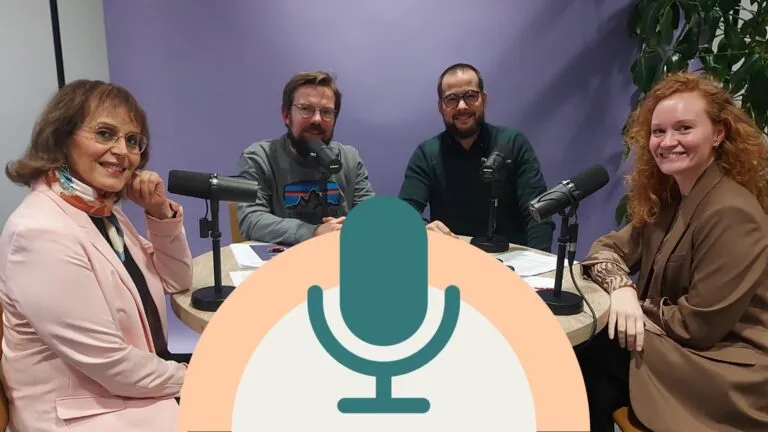
Niels Janssen (researcher at the NDPI consortium / Maastricht University) and Habiba Chrifi-Hammoudi (project leader at the welfare organisation U Centraal) are involved in the ‘We are the cure’ campaign. This campaign helps people to reduce their own risk of dementia and focuses on those who are not sufficiently reached by public information campaigns. With ‘We are the cure’, it did – eventually – succeed.
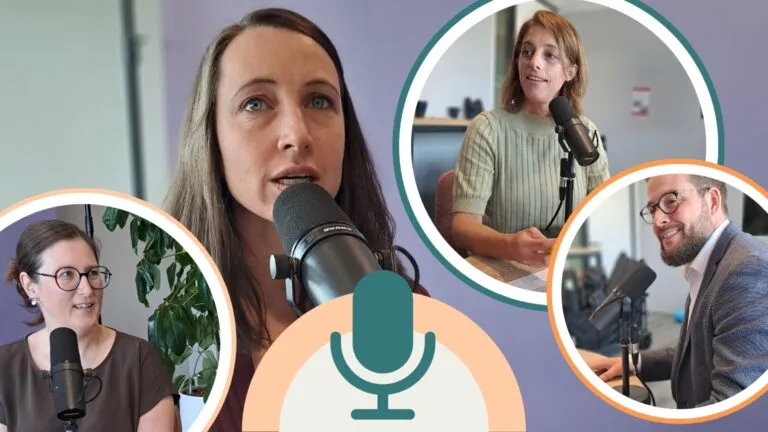
In this podcast, Janssen and Chrifi-Hammoudi discuss their insights, the adjustments that improved the campaign, and why equal partnership with welfare and other organisations is essential. The conversation was led by the hosting duo Jeroen Vlug (researcher and project leader at DEMPACT partner Movisie) and Carlijn Lensink (Impactmanager Education at DEMPACT).
Listen below via Spotify or YouTube.
Podcast | In summary
Certain groups of people are at higher risk of dementia but are, paradoxically, less well reached by health information campaigns. These include people with low levels of education and income, or those from migrant backgrounds. Researcher Niels Janssen (NDPI / Maastricht University) and project leader Habiba Chrifi-Hammoudi (welfare organisation U Centraal) first discussed the causes. These are varied.
Causes
One cause is that traditional information provision (the so-called ‘top-down’ approach) simply does not adequately reflect the experiences of people in high-risk groups.
Another factor is that dementia is a difficult topic to discuss within high-risk groups. People with dementia in high-risk groups – and their loved ones – tend to seek help only at a late stage. This is partly due to a lack of knowledge about dementia. Language barriers, shame and taboos also play a part. Some groups view dementia as a normal part of ageing, others as a mental health problem, and still others as possession.
The ‘We are the cure’ campaign was therefore created to find out how to effectively reach people at high risk of dementia. The campaign was developed by Alzheimer Centrum Limburg (Maastricht University). The NDPI Consortium subsequently refined it.
Success didn’t come straight away
‘We Are the Cure’ was first rolled out on a large scale in South Limburg (2018/2019) via local authorities, GGDs and campaign partners. The emphasis was on general public communication. The reach was extensive, but the campaign did not reach everyone. Nevertheless, the baseline assessment and the experience yielded valuable insights: for example, how researchers can collaborate with numerous regional organisations, and what factors within high-risk groups prevent them from reducing their own risk of dementia (lack of knowledge and time, limited understanding of the link between lifestyle and dementia).
NDPI then refined its approach. A combination of three factors appears to have ensured that the campaign ultimately did reach the people for whom it was intended.
"Co-creation with practitioners starts with listening and taking the time. It certainly doesn’t start with a fully formed idea."
Listening: what is their experience?
NDPI organised focus groups to talk to people from migrant backgrounds and those with lower levels of education or income. The key question was what they knew about dementia and how they felt about the campaign material.
Culturally sensitive communication
NDPI then adapted the campaign materials. For example, abstract pictograms were replaced with clear images. Recognisable information videos were also used: in the participants’ own language and cultural context.
Involvement of key figures and welfare organisations
In Utrecht (Kanaleneiland), NDPI went a step further. There, the approach was neighbourhood-focused and intensive. NDPI involved trusted individuals from the neighbourhood to act as a bridge between the research and the community. The welfare organisation U Centraal played an important role in this. They worked with so-called key figures, and held information sessions featuring films and discussions in the participants’ own language. This approach proved essential for building trust and maximising reach.
"I’ve been campaigning for videos in my own language for 15 years. This campaign has now confirmed just how valuable they are."
Visible engagement and awareness
The outcome assessments are still ongoing. It is already clear, however, that the target group needs information about dementia and how they can help prevent it themselves. Furthermore, the approach in Utrecht visibly led to emotional engagement, awareness and intentions to change behaviour. Examples include taking more exercise and living a healthier lifestyle.
It has also become apparent that research can support social care work. Project leader Chrifi-Hammoudi from the social care organisation U Centraal: “I’ve been campaigning for 15 years for videos in people’s own languages. This campaign has now confirmed that they are valuable. That helps when we ask organisations for funding to produce such videos.”
Not top-down, but together
The discussion between researcher Niels Janssen and social worker Habiba Chrifi-Hammoudi also highlighted important organisational prerequisites. Equality emerged as the most important factor. Collaboration between academia and practitioners (and the target groups) is only possible if it is based on equality and if everyone listens to the wishes and needs of the other. Habiba Chrifi-Hammoudi: “What was nice about this collaboration was that the researchers engaged with us: ‘What do you want?’ They really took the time. It makes you feel taken seriously.”
6 prerequisites for an effective campaign
- Invest time in building relationships,
- ensure a partnership of equals in which researchers and practitioners jointly shape the implementation,
- secure structural funding,
- set up a project group or local team,
- continue to monitor, evaluate and adapt,
- secure support from the local authority and welfare organisations.
Want to find out more?
More inspiration