Linking research with education, professional practice and the business world
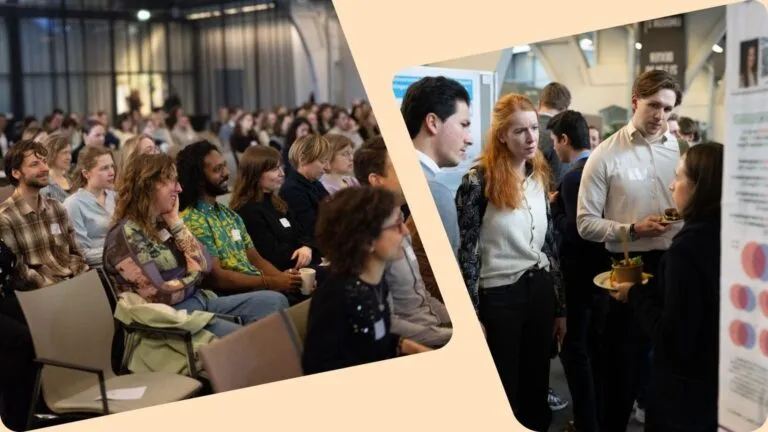
DEMPACT had its own track at the Dutch Dementia Researchers Conference on 12 February 2026. The central theme of the four sessions was the link between research, education, dementia care and the business community.
Would you like to look up other sessions or speakers from the conference? You can do so by checking the DDRC 2026 Programme Booklet (in English).
An Abstracts book is also available if you were a participant at the DDRC: log in to ddrc2026.azuleon.org/myDDRC2026 and look under ‘My docs’.
Database deep dive: making discoveries from dementia data
The session ‘Database deep dive: making discoveries from dementia data’ showed researchers how they can generate concrete research results from existing datasets.
- Dr Katharina Bolsewig (AmsterdamUMC) demonstrated how the European Platform for Neurodegenerative Diseases can support biomarker research by making data and biosamples from a wide range of (longitudinal) cohort studies discoverable and accessible.
- Dr Betty Tijms (AmsterdamUMC) shared her experience within the Global Neurodegeneration Proteomics Consortium (GNPC). She explained how a harmonised proteomics dataset, based on some 40,000 biosample analyses, has been created, and how researchers can efficiently analyse this data via the ADDI workbench.
- Drs Georgia Malliou (AmsterdamUMC) discussed how she is collaborating within the MODEM consortium on -OMICS data to enable integrated analyses across different diseases and modalities.
There are therefore concrete infrastructures that researchers can use, and there is a clear understanding of what is needed to reuse existing data.
The session concluded with a panel discussion featuring the three speakers. The focus was on what working with databases and collaboration means in practice. When is a database the right solution, and when is direct collaboration more effective? What indicators tell you that a dataset is reliable enough to invest time in? What contextual information is essential – but often missing – for a correct interpretation? The main conclusion is that databases are powerful tools, but that using them requires critical thinking:
- Check the data quality,
- assess whether essential metadata and clinical context are available, and
- contact the data producers if necessary.
Would you like to discuss data management?
Didi Lamers, Data Management Coordinator, would be happy to discuss this with you.
Databases are powerful tools, but using them requires critical thinking
How can we make prevention a more powerful tool?
Research shows that lifestyle and preventative measures can reduce the risk of dementia. In the session ‘Dementia as a societal challenge’, leading dementia scientists spoke to an engaged audience.
How do you translate scientific insights into practice in a clear and motivating way? Which factors can actually be influenced? And how do you ensure that prevention leads to action – and thus makes a real difference?
Speakers in this session were:
- Amber Yaqub and Prof. Frank Wolters on behalf of BIRD-NL.
- Dr Lieke Bakker,Anne Roos van der Endt and Dr Niels Janssen on behalf of NDPI.
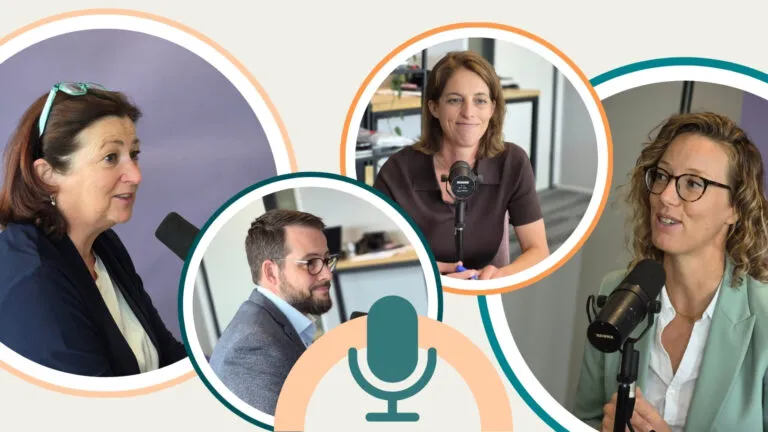
Topics covered included the ‘We are the medicine’ campaign, which was recently rolled out in South Limburg, Utrecht and Groningen. A podcast has also been released on this topic, in which Niels Janssen explains in detail how the campaign was adapted and further developed. As a result, it reached people who are usually difficult to reach through public health information campaigns.
Better care education: from ‘delivering care’ to ‘supporting people’
How can we truly prepare (future) professionals to work with people with dementia? Two inspiring speakers provided compelling answers to this question.
During the first part of this session, Dr Simone de Bruin, a lecturer at Windesheim University of Applied Sciences, shared insights from the projects she is involved in within the SPREAD+ and ENABLE-DEM consortia (windesheim.nl).
De Bruin places the focus not on the disease, but on the person. Her call to action is clear: shift the focus from knowledge about types of dementia to learning how to cope with daily life whilst living with dementia. Professionals need interpersonal skills, an open and reflective approach to learning, and a more positive outlook.
Future-proof dementia care begins with a shift from simply having knowledge about dementia to knowing how to live with it.
Learning does not take place solely in the classroom, but rather in practice and within learning communities where care, education, research and people with dementia work together. Their perspective highlights just how important respect, autonomy and learning together are. Karel Kans, a practice-oriented researcher at ROC Mondriaan (rocmondriaan.nl) and affiliated with the Practoraat Centre for Innovative Craftsmanship, is collaborating with mboRijnland (mborijnland.nl) to investigate what vocational students on care programmes need in terms of dementia education.
In part two of this session, Kans explained that students struggle most with communication and behaviour in practical settings. His message: link theory and practice much more closely, and collaborate closely with the professional field. Future-proof dementia care begins with a shift from simply having knowledge about dementia to knowing how to deal with dementia.
This is how public-private partnerships really work
Companies and researchers from DEMTECH (umcgresearch.org) and SPREAD+ are collaborating successfully. Following a brief introduction and overview of the context, this session – organised by Health Holland – featured presentations on the SPREAD+ and DEMTECH programmes. This included examples of ongoing public-private projects within these programmes. Various companies also presented their innovations and the challenges they had faced, and highlighted areas where researchers could make a contribution. Finally, available funding programmes were also discussed. The session thus demonstrated how science, technology and entrepreneurship can come together to create impact.
Afterwards, there was a networking lunch attended by the following private sector representatives:
- Hedderik van Rijn, director of Precision Cognition Labs (precision-cognition.com)
- Willem Schüngel, CEO of Remind (remindbrainhealth.com)
- Olga Karpus – CEO, Alzheimer’s Evolutionary (AE)
- Peter Spijkers, owner of Alzheimer.App
- Vincent Eurlings, CEO, Aumens (aumens.com)
Your opportunities for public-private partnerships
Would you like to discuss opportunities for public-private partnerships in your dementia research? Please contact Saartje Burgmans, Impactmanager Business-development.




More inspiration