NDPI
A healthier lifestyle can reduce your risk of dementia. But how do you reach the people most at risk? And how do you support them further? That is what the NDPI is investigating.
Who works together within NDPI?
NDPI is a partnership comprising ten research organisations and civil society organisations.
NDPI stands for the Dutch Dementia Prevention Initiative. It forms part of ZonMw’s Dementia Research Programme, which also funds the consortium.
Who’s who?
Prof. Dr Sebastian Köhler is the principal investigator of NDPI and leads the consortium, together with Prof. Dr Edo Richard. The research is divided into five so-called work packages. These are led by Dr Janne Papma, Dr Leonie Visser, Prof. Dr Ellen Smets, Dr Kay Deckers, Prof. Dr Eric Moll van Charante, Dr Warsha Jagroep and Drs Anne Marie Vaalburg.
Collaborating partners
- Alzheimer Centrum Limburg, lead applicant
- Radboudumc (Department of Neurology and Radboud Alzheimer Centrum)
- Erasmus MC Alzheimer Centre
- Amsterdam UMC (Department of Medical Psychology; Department of Public and Occupational Health; Department of General Practice)
- University of Groningen
- Inholland University of Applied Sciences
- Pharos
- GGD West Brabant
- Brain Foundation
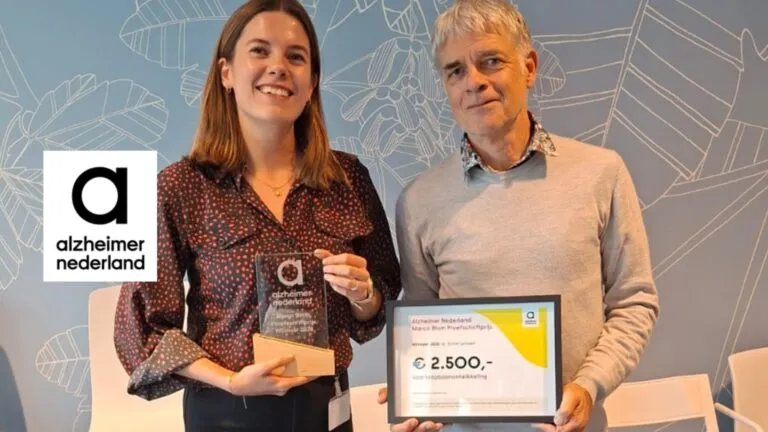
- Alzheimer Nederland
Find out more about the Dementia Research Programme at zonmw.nl.
Preventing dementia: prevention that really works
A healthier lifestyle can reduce your risk of dementia. But how do you reach the people most at risk? And how do you help them further? That is what NDPI is investigating.
NDPI has organised its research into so-called work packages: ENGAGE, COMMUNICATE, INFORM and INTERVENE.
A fifth work package is entirely focused on (and titled) IMPACT; you can read more about this on Impactplan.
Reaching the people who need prevention the most
Not everyone has the same opportunities to live healthily and prevent dementia. People on lower incomes, with limited health literacy or from migrant backgrounds are at greater risk, but health educators reach them less often. These groups are less likely to take part in prevention programmes or research. In the ENGAGE work package, NDPI is investigating why this is the case. What makes healthy living difficult? And what hinders participation in research?
Effective communication about risks
Hearing that you are at high risk of dementia can be quite a shock. Some messages frighten or discourage people. But how do you explain risks – and how to reduce them yourself – in a clear and respectful way? In the COMMUNICATE work package, NDPI is investigating how to tailor communication more effectively to people at increased risk who are on lower incomes or have a migrant background. What works best: images, videos or face-to-face conversations? And which messages inspire trust, whilst which ones provoke resistance?
Public health campaign
The fact that you can help prevent dementia yourself is not yet widely known. How do you raise awareness of this on a broad scale? Does a large-scale public health campaign really help to change behaviour among people at higher risk? NDPI is investigating this in the INFORM work package.
A personalised approach: more effective?
Perhaps a campaign works better if it is combined with personalised support. In the INTERVENE project, NDPI is therefore investigating whether an interactive app featuring a remote coach (MIND-PRO), tailored to people who are not normally reached, does indeed help people to live healthier lives – and reduce their risk of dementia.
'What we’re doing is truly pioneering work. There’s a lot of interest from abroad. We want to help other universities do the same.'
Intervention studies
To reduce the risk of dementia among groups that are difficult to reach, NDPI develops and tests interventions: what really works?
NDPI organises interviews and focus groups with people from at-risk groups to better understand their concerns. Researchers also conduct surveys and test apps and public awareness campaigns in various locations across the Netherlands to see what works in practice.
Qualitative research into population groups
To understand why health educators and researchers are unable to reach specific groups, or reach them only to a limited extent, NDPI uses qualitative research to gather existing knowledge on dementia risks and the experiences of different groups of people. Researchers also conduct interviews and focus group discussions to allow people to speak for themselves about their ideas, concerns and barriers. In addition, NDPI conducts large-scale surveys to identify patterns. The consortium also organises focus groups and surveys among these groups to find out what their information needs, preferences and sensitivities are when it comes to communication.
Co-creation & large-scale impact assessments
NDPI will then develop information materials tailored to the wishes and needs of the target groups. Researchers are testing various forms of content, such as videos or texts that explain risk factors: sometimes using direct language, sometimes in a more nuanced way. Which messages resonate and which provoke resistance?
The researchers used these insights to work with local health authorities (GGDs) to improve existing public awareness campaigns. Examples include those for the ‘MijnBreincoach app’ and ‘We are the medicine’ (more on this under ‘What are the benefits?’). These are being rolled out across four GGD regions. The researchers are measuring changes in participants’ knowledge, attitudes and behaviour regarding dementia prevention and risk factors. They are doing this using a large-scale questionnaire which they administer before and after the campaign to two randomly selected groups of 1,000 people each.
At the same time, researchers are launching so-called ‘living labs’ in two neighbourhoods, where residents work with professionals to devise dementia prevention activities, such as walking groups, cookery classes and information evenings. In this way, they link awareness-raising to real activities in the neighbourhood.
Developing and testing measurement tools and apps
Through applied research, the NDPI is investigating whether personalised, digital support is more effective at engaging groups that health educators normally struggle to reach. To this end, researchers are first developing suitable measurement tools. For example, memory tests are being adapted for people who are not used to formal testing.
NDPI is also conducting large-scale trials of the interactive lifestyle app with a coach, MIND-PRO, through GP practices. The researchers are comparing the effect of this interactive app with a coach against an app that only contains health information.
Adapted smartphone apps are also being developed to automatically measure behaviour and social activities. In small-scale pilot studies, they are testing whether the apps are easy to understand and user-friendly – and whether they lead to healthier behaviour and slower cognitive decline.
Predictive models
NDPI is also working on computational models that can provide a realistic estimate of the benefits of people adopting a healthier lifestyle. For such models, researchers use data from other work packages. The model enables researchers to estimate the long-term effects of the interventions, including healthcare costs and health outcomes. This is why it is also known as a predictive model.
Practical steps to prevent dementia
The NDPI is also committed to helping people who are currently often not reached by prevention programmes.
These include guidelines for risk communication, tailored campaigns and health apps. These resources are intended for healthcare professionals, policymakers and the general public. In addition, NDPI naturally also publishes scientific articles, including this one (in English):
- ‘Awareness and knowledge of dementia risk reduction among current and future health professionals: A survey study.’, see pubmed.ncbi.nlm.nih.gov.
- ‘Increasing awareness for dementia risk reduction through a public awareness campaign in Denmark: A pre-post study.’, see pubmed.ncbi.nlm.nih.gov.
- ‘mHealth Intervention for Dementia Prevention through Lifestyle Optimisation (MIND-PRO) in a primary care setting: protocol for a randomised controlled trial in people with low SES and/or a migrant background.’, see pubmed.ncbi.nlm.nih.gov.
For further publications, please visit the project page on zonmw.nl.
Guidance on appropriate risk communication
How do you discuss the risk of dementia without making people afraid or discouraged? NDPI develops practical guidelines and best-practice advice on clear, respectful and motivational communication tools for healthcare professionals and communication advisers, based on research into the wishes and concerns of people in at-risk groups.
In addition, NDPI draws up guidelines for inclusive prevention. These help policymakers, researchers and other professionals to better tailor interventions to people with, for example, a migrant background, a low income or limited health literacy.
More effective public awareness campaigns
Based on scientific insights and in collaboration with regional GGDs, NDPI developed the public awareness campaign Wezijnzelfhetmedicijn.nl. NDPI adapted the campaign to suit different language levels and cultural preferences. The campaign was ultimately rolled out in South Limburg, Utrecht and Groningen. The evaluation and analysis are still ongoing. DEMPACT will share the results as they become available.
International recognition
What NDPI has achieved is unique in the Netherlands and beyond: never before has an attempt been made to reach and engage people with low health literacy on this scale.
'For us, collaboration really is the key. For example, we’ve recruited 200 ‘campaign friends’ in South Limburg. Businesses, sports organisations, all the local authorities, healthcare providers, museums and even festivals such as Pinkpop are promoting the campaign.'
Lifestyle app with personalised advice
NDPI has also developed an app that provides personalised advice to people at increased risk of dementia on sleep, exercise, diet and other lifestyle habits. It is called My Brain Coach.
Support for healthcare professionals
NDPI aims to provide educational materials on reducing the risk of dementia, as well as webinars and masterclasses. These are intended for GPs, practice assistants, social care workers and students. The training materials focus on discussing dementia risks and supporting people through this process.
Predictive models for impact
Finally, NDPI is developing a predictive model that will enable healthcare organisations and policymakers to assess the precise benefits of dementia prevention. This model illustrates not only the impact on health but also the long-term financial benefits. This makes it clear which interventions are most effective and where investments are best directed.
IMPACT in research and society
One of the so-called work packages of the NDPI consortium is entirely focused on (and titled) IMPACT.
Do you have any questions or would you like to collaborate? Please contact Dr Kay Deckers, leader of this work package: kay.deckers@maastrichtuniversity.nl.
Target group participation and co-creation
One prerequisite for developing programmes that demonstrably prevent dementia is that apps, campaigns and programme components are tailored to the people for whom they are intended. NDPI has been doing this from the outset, through the way in which it conducts its research. You can read more about this under ‘What kind of research?’.
Training and teaching materials for professionals
Ultimately, the insights and tools that NDPI develops together with the target groups must, of course, be used by GPs, practice support staff and other healthcare providers. This does not happen automatically. That is why NDPI also develops training and teaching materials for professionals.
Here too, it is essential to tailor the content to the intended audience. NDPI therefore first assesses what students (on healthcare and welfare courses) and professionals in the healthcare and social sectors currently know, think and do to reduce the risk of dementia. Based on this, NDPI develops teaching materials and modules for courses at senior secondary vocational (MBO), higher professional (HBO) and university level. This enables healthcare professionals to better prepare themselves for the prevention of dementia.
Communication
Campaign and media
To make people from all relevant groups aware that they can take action themselves to prevent dementia, NDPI also ran the ‘We are the cure’ campaign (more on this under ‘What are the benefits?’), in collaboration with local public health services (GGDs).
Furthermore, the NDPI generated media coverage in the region where the campaign took place, including on Omroep Limburg. Campaign posters were also displayed in locations such as bus shelters.
Knowledge summarised for sharing
For other researchers and public health communicators, NDPI produced a summary of the factors that act as barriers and enablers when seeking to involve specific groups in research into the prevention of dementia.
Scientific impact
As well as through scientific publications, NDPI also shares knowledge via symposia and conferences. For example, NDPI did so at Alzheimer Europe 2024 and during the Dutch Dementia Researchers Conference 2024.
(Inter)national collaboration
NDPI also actively seeks out collaboration in order to share and apply knowledge at both national and international levels.
- The MijnBreincoach app is being launched in Luxembourg and is also expected to be launched in Germany.
- Further research is planned amongst Turkish migrants in the Netherlands and amongst residents of Turkey.
- Within the European working group on Brain Health Services, NDPI is involved in risk communication.
- There is collaboration with the WHO.
Within the Netherlands…
- NDPI is affiliated with the Regional Agreements (Plans for the Integrated Transformation Plan for Limburg and the Maastricht-Heuvelland Delta Plan for Elderly Care);
- NDPI is working in partnership with the Ministry of Health, Welfare and Sport;
- NDPI is rolling out the ‘We are the medicine’ campaign in Utrecht, Roermond and possibly Friesland;
- NDPI is collaborating with the HELIUS study and the City of Amsterdam to recruit participants for the INTERVENE work package (more on this under ‘Working on which problem?’).

Inspiration