Co-creation is not a method but an approach
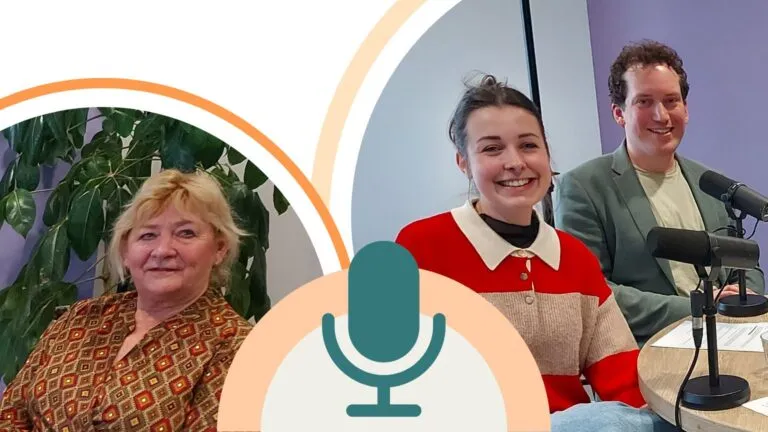
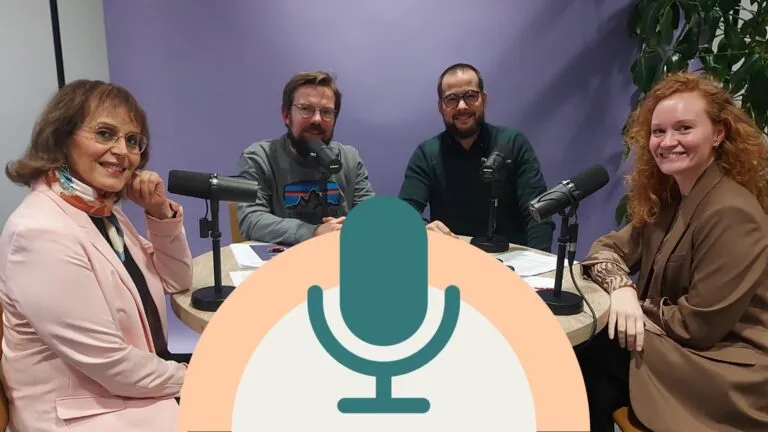
Do you want to develop technological aids that help people with dementia to continue living comfortably at home for longer (and make life easier for their loved ones too)? Then you need to do so through co-creation with these people – right from the very start and throughout the entire process. But how do you go about this effectively, for different groups? Professor by special appointment Rens Brankaert (QoLEAD & TU/e, Fontys University of Applied Sciences, Tilburg University), design researcher Katie Verschueren (Avans University of Applied Sciences) and welfare worker Corrie Kerstens (Surplus care organisation) will be discussing this.
Brankaert shares his experiences with ‘De Meerpaal’, a living lab focusing on technology and dementia; Verschueren and Kerstens share their experiences with the ‘(t)huis van de toekomst’ project and the Avans Dementia Panel.
Listen below via Spotify, Springcast or YouTube.
Podcast | In a nutshell
There are many technological aids that can help people with dementia (and their carers) to continue living comfortably at home for longer. However, many of these aids never reach them at all. This is because such innovations often do not meet the needs of people with dementia (and their carers) or fit in with what they find useful.
The solution is to design technology together with people with dementia and their carers. In other words, co-creation. Ideally, from the very beginning and throughout the entire process.
But how do you go about this effectively, for different groups? That is the topic of discussion in this podcast, featuring Professor by Special Appointment Rens Brankaert (TU/e, Fontys University of Applied Sciences and Tilburg University), design researcher Katie Verschueren (Avans University of Applied Sciences) and welfare worker Corrie Kerstens (care organisation Surplus).
Tip 1 for co-creation: from the start
If you want co-creation to really work, you need to get it right from the start. Not just when testing a near-final product, but right from the stage of exploring the daily lives, context and needs of people with dementia.
"You need to be absolutely sure that the context and the design are a good fit. Otherwise, it’s a waste of time and resources."
In other words: how does a person live, what challenges do they face, and what do they want to continue doing themselves? This requires conversations, observations and building a relationship of trust. At the De Meerpaal living lab, this is done systematically. Another helpful tip is to start with a broad research question. That gives you the scope to uncover the real needs.
Brankaert: “You need to be absolutely certain that the context and the design are a good match. So first, carry out accessible research within the context, so that you know: this is where we can make a difference. And only then should you scale up further. If you do it the other way round, it’s a waste of time and resources.”
Tip 2 for co-creation: involve design experts
Involve people who are trained as designers in the design process and in your research programme. Such as industrial designers. They know how a development process works and what methodologies are available. Brankaert: “I see large randomised controlled trial studies that last four years and are incredibly expensive, whilst you could ask yourself right from the start: is the technology being researched there actually suitable?”
Tip 3: co-creation – flexible and relational
Another prerequisite is that the co-creation process is flexible and relationship-based. For a valuable collaboration, you need to adapt your methods to the capabilities of people with dementia and their carers. This requires a reflective approach on your part as a researcher, as well as support through tangible materials, images or simple choices.
“If you find that something isn’t working, consider what suits the people you’re carrying out the design process with.”
If a method isn’t working, adapt it or let it go. The perspective and wellbeing of people with dementia always take precedence over the research question. Co-creation is therefore not a method, but more of an attitude. Katie Verschueren: “If you realise it isn’t working, you could persevere, but it’s better to see what suits the people with whom you’re carrying out that design process.”
A major bonus
Co-creation also yields a major bonus, alongside technological aids that make a real difference. Corrie Kerstens explains. As a welfare worker and gatekeeper, she played a crucial role in various meetings of the Avans Dementia Panel. Kerstens supported students in their interactions with residents, helped to interpret situations and ensured boundaries were respected. And she observed: “It’s a win-win situation. Students carry out their research and our residents with dementia really enjoy working with the younger generation. They also feel heard and find it a valuable activity.”
The Meerpaal Project
De Meerpaal is a so-called ‘living lab’ where researchers, students and people with dementia meet weekly, based in a community centre. The focus is mainly on social activities, such as having a coffee together. This informal setting gives researchers and students the opportunity to chat with people with dementia, ask questions about their experiences, present ideas or prototypes, and sometimes actually carry out research.
The aim is for researchers to build relationships with participants, gain a better understanding of how people with dementia live and the challenges they face in daily life. Building on this foundation, De Meerpaal is also used as a practical setting for co-creation.
The design process follows set steps, with people with dementia (and their carers) involved at every stage:
- Understanding the context: identifying how a problem arises in everyday life.
- Developing ideas together: researchers discuss possible solutions with users.
- Co-creation: researchers involve users in the design process, for example by testing materials or designs together.
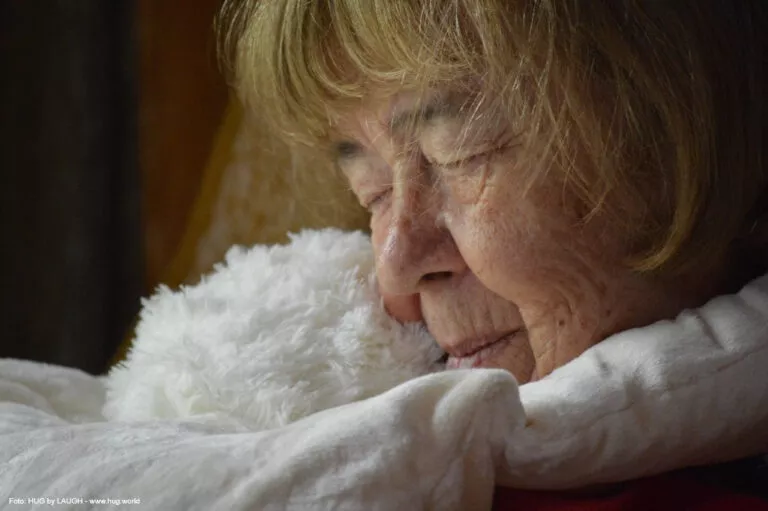
De Meerpaal has carried out at least 40 projects. Two concrete and now well-known outcomes are the Welthuis Kompas (a navigation aid that helps people find their way back home) and the music cushion (a cushion that plays music or sounds when someone places a hand on it; for people in the later stages of dementia).
Project ‘Home of the Future’
In this project, researchers and students (from Avans University of Applied Sciences), together with people with dementia, informal carers and professionals, are developing technology that can support independent living at home. First of all, researchers visited people with dementia and their carers at home to gain an insight into their daily lives. Through creative methods, they learnt to understand what their daily lives are like, what they can still do independently, and what they would like to do themselves but are no longer able to.
They also identified which existing aids people were already using – technological solutions, of course, but also simple adaptations, such as a sticker on a radio to help recognise a particular station.
The students then began designing innovations. They presented these to people with dementia, their loved ones and care professionals. In this way, prototypes were evaluated and adapted.
Want to find out more?
About the speakers
- https://www.linkedin.com/in/rensbrankaert/
- https://www.linkedin.com/in/katie-verschueren-0743b5b9/
- https://www.linkedin.com/in/corrie-kerstens-b1387676/
About the projects
(t)home of the future:
digitalepublicaties.movisie.nl/
More about the Welthuis Kompas
More about the Vitapillow music cushion
About the organisations
More inspiration